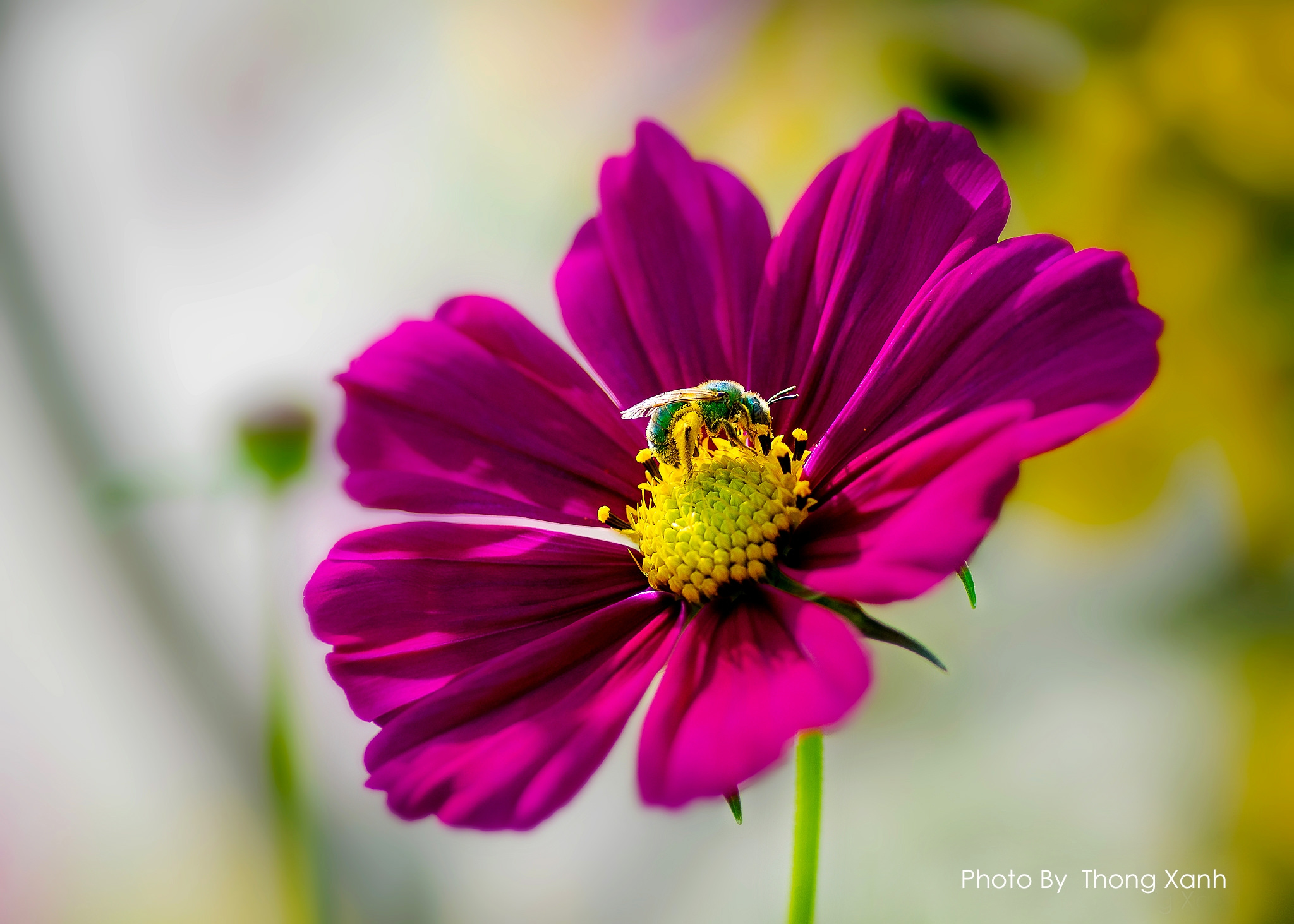
10 Years of Wild Bee Data Collected
 The ongoing research project at Massasoit Community College is focused on the abundance and diversity of local native bee communities. In the early 2000’s colony collapse disorder became part of the collective consciousness. In 2008, BioScience published “Colony Collapse Disorder: Many Suspects, No Smoking Gun,” (2008, Wantanabe). Since then colony collapse disorder has been attributed to neonicotinoids and mite parasitism (2009, vanEngelsdorp, et al.).
These studies have been focused on honey bees (apis mellifera) which are not native to North America. Our study is focused primarily on the numbers of wild bees in the area. Regular sampling of six different sites began in 2016. The study has been continued to be managed by student interns since then under the direction of Dr. Michael Bankson and mentors Adam Germaine and Thais Marino.
Since 2016
-
- Over 20,000 bees have been collected
- 35 presentations given by student interns at national scientific meetings
- One of only a few long-term bee studies
Research Goals
-
- Good experimental design
- Thoughtful analysis
- Publication-quality output
- Contribution to scientific community
Why study bees?
-
- Bees are incredibly productive pollinators, visiting thousands of plants per day.
- As a keystone species, bees have an outsized impact on the ecological community to which they belong.
- Bees have diverse and abundant communities.
- Bees are an essential part of ecosystem health and food production.
Methods
Data Collection
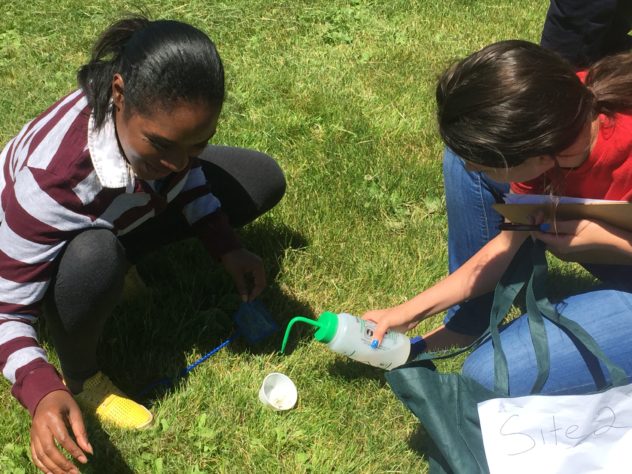 We use two different methods to collect wild bees; sweep-netting and pan traps. Pan traps are used for collecting smaller bees that fly close to the ground. Sweep-netting is used for collecting larger bees that fly higher above the ground.
In this study bees are collected from six collection sites in Plymouth County, Massachusetts that have different ratios of permeable to impermeable surfaces, a key marker of urbanization. There are protocols in place for pan trap placement and sweep netting to ensure consistency across collection dates. A senior intern is assigned to each site on a rotating basis to ensure quality control and avoid creating confounds in the data.
Pan traps are set for 24 hours, after 24 hours the traps are collected and sweep net collection occurs. Additional data including the weather, temperature, and GPS coordinates of the traps are noted in the field data. Samples are brought back to the lab at Massasoit Community College, where they are separated from non-bees, dried, pinned, counted and identified. Each step in the process requires prior training and understanding of the protocols. Interns are tested on their knowledge and skills before they are allowed to work independently.
Sampling Season and Frequency
Sampling occurs every two weeks from thaw to frost (approximately). We begin scheduling sampling dates when the first bee activity starts for the season, generally sometime in April. After the first hard frost, generally towards the end of October, no more sampling will occur. Weather is taken into account when scheduling sample dates, as well as rotating interns across different sites to avoid confounds in the data.
